Palace of the Rumyantsevs and the Paskeviches in Gomel
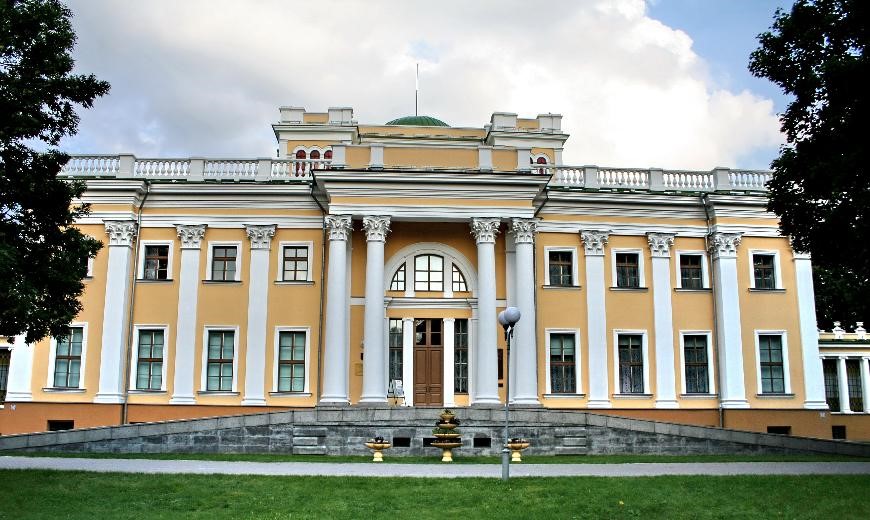
In the late 18th century the Belarusian lands were part of the Russian Empire. Empress Catherine the Great gave Gomel to her favorite, General Field Marshal Piotr Rumyantsev-Zadunaisky, for his outstanding victories in the war against Turkey. On the bank of the River Sozh there was a wooden castle, which had earlier belonged to Michal Fryderyk Czartoryski, the Grand Chancellor of Lithuania. Piotr Rumyantsev had the wooded castle demolished and a new one built. The construction of the castle in the style of early Classism began in 1777, with prominent architects of that time Y.N. Alekseyev, K.I. Blank, Y.M. Felten, M.K. Mostsepanov advising on its design.
The last owner of the Gomel estate was Duchess Irina Paskevich, a patron, a philanthropist and a translator. She made the first translation of Leo Tolstoy’s War and Peace into French. Later the residence, its rich library and collections became part of the Museum of Art and History which was opened in 1919. The palace was destroyed and restored several times. It suffered the most severe damage during an uprising in 1919 and the Great Patriotic War. Throughout its history the palace was used for various purposes. It housed a telephone station, a library, a puppet theater, a youth center and a museum.
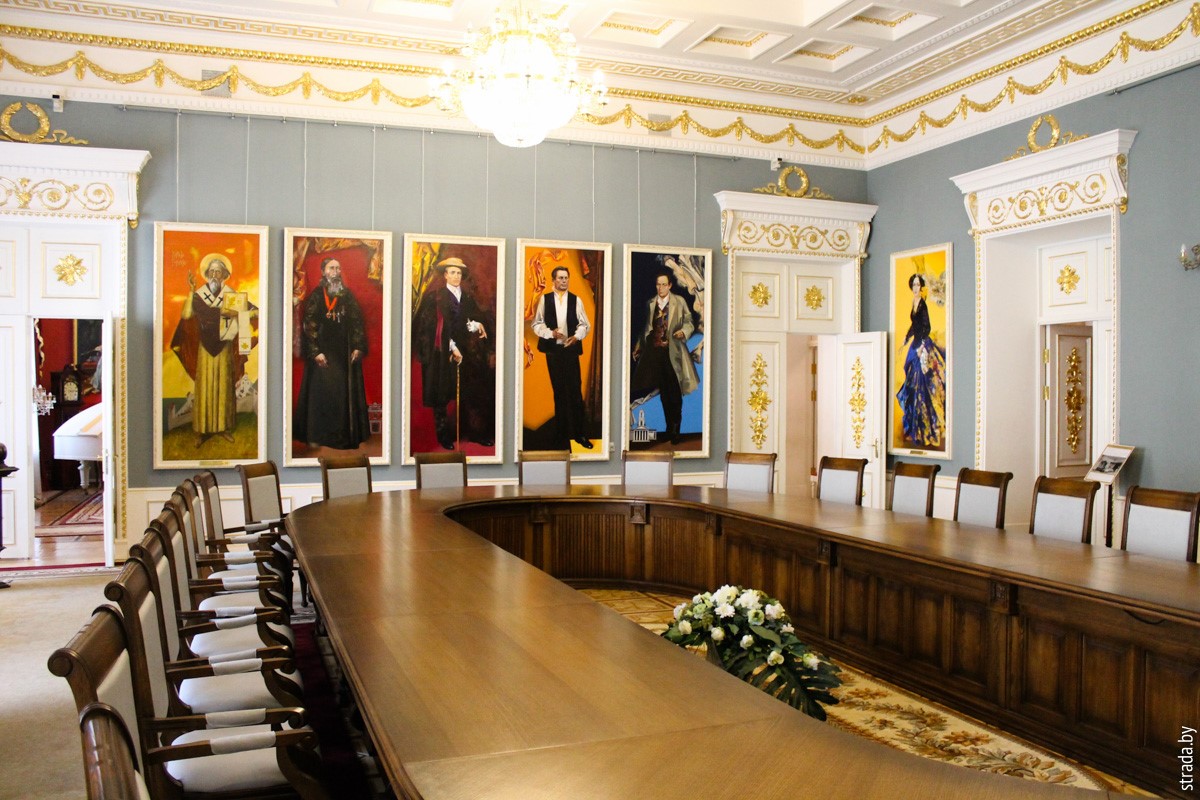
Today the former residence of the aristocrats in Gomel is one of the most interesting and frequently visited Belarusian museums and a major historical, cultural and educational center. The ground floor of the central part of the palace has exactly the same interior as in the past thanks to the meticulous restoration based on historic documents. This part of the palace still houses Column Hall, White Living Room, Red Living Room and a hall of ceremonies (former Golden Dining Room). These halls are not merely a part of the exposition. They are also used for balls, concerts and meetings attended by top officials from different countries. The Gomel palace also hosts picture, photo and other kinds of exhibitions and interesting educational projects.